
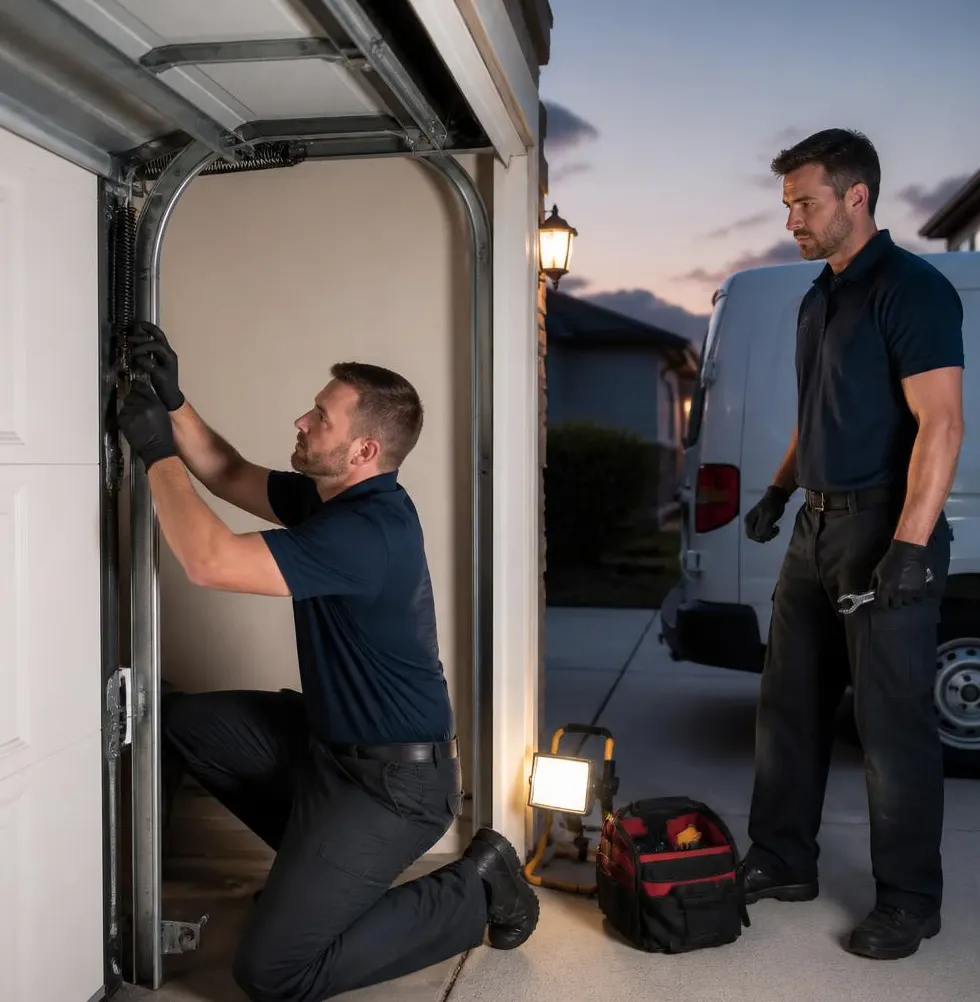
The Short Answer
A torsion spring holds enough stored energy to snap a winding bar out of your hands, crack ribs, or take off a finger in a fraction of a second — and that energy doesn't announce itself before it releases. Replacing a spring safely requires specific tools, a controlled winding technique, and an understanding of how much tension a particular spring holds based on your door's weight and size. Without that, even careful, handy homeowners get hurt. This isn't a difficulty issue; it's a physics issue.
What Actually Goes Wrong
Most garage door spring injuries follow one of a few patterns:
- The winding bar slips. Torsion springs are tensioned using steel winding bars inserted into the spring cone. If the bar isn't fully seated, or the homeowner uses the wrong size bar (or a screwdriver instead of a proper bar), the spring can unwind violently mid-adjustment, sending the bar spinning like a propeller.
- The spring is under tension when someone starts working on it. A door that's still partially supported by old springs can drop suddenly once a cable, bracket, or fastener is loosened. Hands and fingers near the bottom bracket or cables are especially vulnerable.
- The wrong spring is installed. Springs are rated by wire size, coil diameter, and length — all matched to door weight. A mismatched spring either fails to lift the door properly or over-tensions and fails early, sometimes explosively.
- Old, corroded hardware fails under load. Years of humid summers followed by icy winters take a toll on brackets, cables, and center supports. Metal that looks fine can be weakened enough to shear when tension is reapplied.
How Bad It Gets
These aren't minor nicks. Emergency rooms regularly see fractured fingers, crushed hands, facial lacerations, and eye injuries from garage door spring work. Broken torsion springs under tension have enough force to dent drywall, shatter windshields parked nearby, or fracture a skull if someone is standing in the wrong spot. The injuries tend to be severe because the energy release is instantaneous — there's no warning, no slow build-up, just a sudden and violent snap.
Specific Actions That Prevent It
If you want to stay safe around your garage door system, the rules are simple and non-negotiable:
- Never loosen or remove a torsion spring's set screws without properly sized winding bars inserted and fully seated first. This is the single most common point of failure.
- Keep hands, face, and loose clothing clear of the spring, cables, and bottom brackets whenever the door is disconnected from the opener for manual testing.
- Never use the opener to test a door with a broken or weakened spring. The opener motor isn't designed to lift the full dead weight of a garage door, and doing so can snap the opener's drive gear or cause the door to fall.
- Don't reuse old cables, pulleys, or brackets when replacing a spring. If one component has corroded or fatigued from years of weather exposure, the whole system is only as strong as its weakest part.
- Match the replacement spring to the door's exact weight and cycle rating. This requires either the original spring's stamped specs or a weight calculation — guessing is how mismatched, dangerous springs end up installed.
Why This Matters More Heading Into Winter
Cold temperatures make steel more brittle, and springs that are already fatigued from a long humid summer are more likely to fail outright once ice and cold set in. If your spring is making noise, looks stretched or gapped between coils, or your door has started feeling heavier to lift by hand, that's your warning sign — and winter is exactly the wrong time to let it go unaddressed or attempt a fix yourself in a cold garage with stiff, unforgiving metal.
When to Call Lovettsville Garage Door
If you're hearing a loud bang from the garage (often the spring breaking), noticing the door won't stay open, or seeing visible gaps in the spring coils, it's time to call. Our technicians handle Spring Replacement with the right winding tools, correctly rated springs matched to your door's weight, and proper safety procedures every time — no guesswork, no shortcuts. We also offer Garage Door Maintenance visits that catch spring wear and hardware corrosion before they turn into a snapped spring or a dropped door, which is especially worth scheduling before the hardest part of winter hits Loudoun County.
If your garage door spring looks worn, sounds off, or has already broken, don't reach for a winding bar yourself. Call Lovettsville Garage Door for safe, professional spring replacement and maintenance across Lovettsville, VA and the surrounding area.