
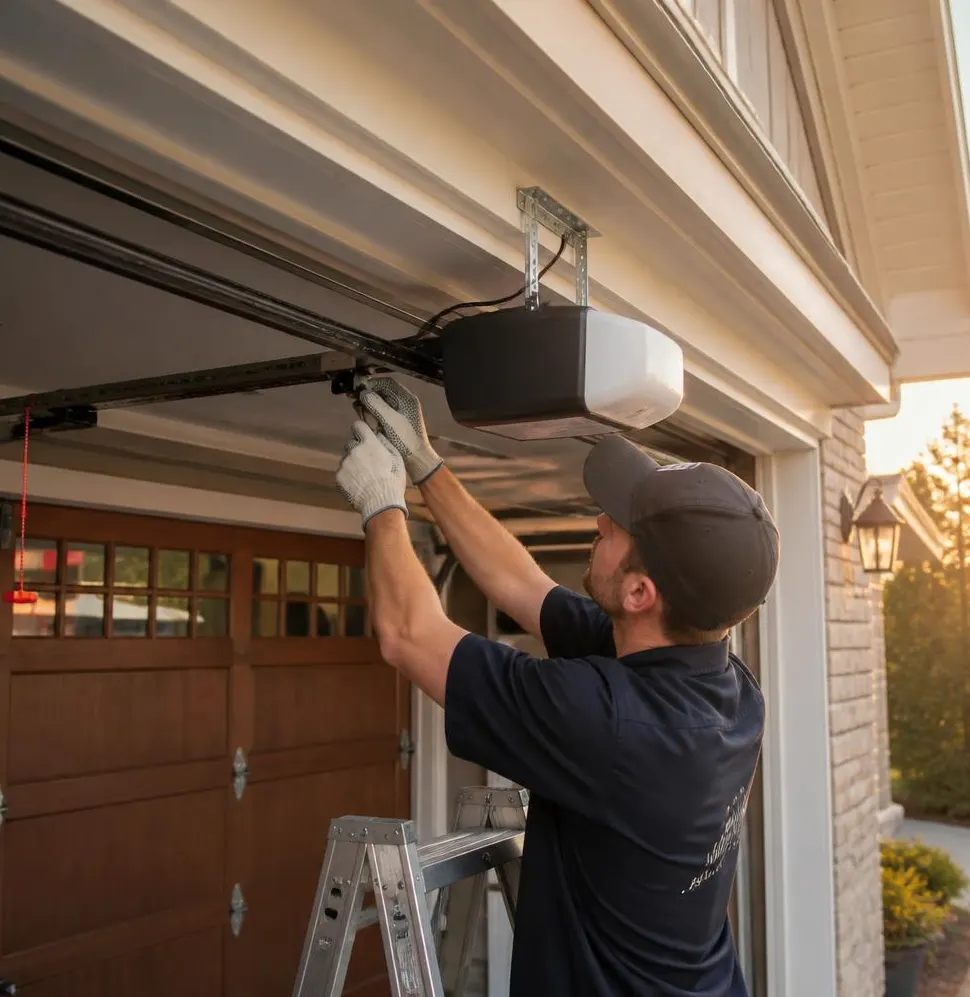
What That Grinding and Banging Is Actually Costing You
A noisy garage door opener feels like an annoyance you can live with, but ignoring it through another winter rarely ends well. The clanking and squealing you hear now is usually loose hardware, dry rollers, or a stretched chain working harder than it should. Left alone through a Loudoun County winter, cold temperatures stiffen old lubricant, metal brackets contract, and extra strain on worn parts can turn a quiet fix into a snapped cable, a bent track, or a burned-out motor during the coldest week of the year — exactly when you don't want to be stuck outside in the dark fighting with a dead opener.
The good news: most noise problems follow a predictable order, from a five-minute tightening job to, in some cases, swapping out the whole opener drive system. Here's how to work through it.
Tools You'll Need
- Socket wrench set or adjustable wrench
- Stepladder
- Silicone-based garage door lubricant (not WD-40 or grease, which attract grit)
- Work gloves and safety glasses
- Flashlight
Step-by-Step: Quieting a Loud Opener
1. Listen Before You Touch Anything
Run the door up and down once and pay attention to where the noise happens. A rattle along the track usually means hardware or rollers. A grinding sound near the motor unit points to the chain or belt and gearing. Squeaking at specific points along the travel usually means dry rollers or hinges. This five-minute step tells you where to focus so you're not chasing the wrong fix.
2. Tighten Every Bolt and Bracket (DIY)
Garage doors flex every time they open and close, and that constant motion works screws and lag bolts loose over time — especially in older homes where the hardware has had years to vibrate. With your socket wrench, go over every bracket holding the track to the wall and ceiling, the hinges between panels, and the mounting bolts on the opener unit itself. Snug, don't overtighten.
3. Lubricate the Moving Parts (DIY)
Apply silicone-based lubricant to the rollers, hinges, the track itself, and the opener's chain or screw drive. Skip the springs for now unless a technician has told you otherwise — springs under tension are not a DIY lubrication job in the same casual way. Humid summers followed by cold, dry winters are hard on these parts, so this is worth doing twice a year, not just when things get loud.
4. Inspect and Replace Worn Rollers (DIY, with limits)
Old steel rollers are a common noise source, particularly on older houses that still have original hardware. If you can see flat spots, rust, or wobble, swapping them for nylon rollers is a straightforward DIY job on most doors and makes a noticeable difference in noise. Stop here if any roller is near a cable or spring assembly — that's technician territory.
5. Check Chain Tension and Opener Mounting
A chain that's too loose will slap against the rail with every cycle. Most openers have a tensioning bolt or nut near the motor head; consult your opener's manual before adjusting, since over-tightening strains the motor. Also check whether the opener unit itself is bolted rigidly to the ceiling joists — adding a rubber isolator or vibration pad between the mounting bracket and the joist can cut down on transmitted noise through the ceiling.
6. Consider a Belt-Drive Swap (Technician Job)
If you've done all of the above and the opener is still loud, the issue is often the drive mechanism itself. Chain-drive openers are inherently noisier — metal chain against metal gear — and age makes it worse. A belt-drive opener runs on a rubber-reinforced belt instead of a chain and is dramatically quieter, which matters if your garage sits under or next to a bedroom. This isn't a swap-and-go DIY project: it involves replacing the entire opener head, rewiring safety sensors, and setting travel limits and force settings correctly, which is where a technician earns their keep.
When to Call Lovettsville Garage Door
If you've tightened hardware, lubricated everything, and the noise is still there — or if you hear grinding near the springs, see a sagging cable, or notice the door isn't opening evenly — stop and call a professional. Our Garage Door Opener Repair & Installation service covers everything from diagnosing a failing motor to installing a quieter belt-drive system sized correctly for your door's weight and age. We also offer Garage Door Maintenance visits that check spring tension, track alignment, and hardware wear before winter ice and cold make small problems worse.
If your garage door opener is driving everyone in the house up the wall, give Lovettsville Garage Door a call. We serve Lovettsville, Purcellville, Waterford, Hamilton, Round Hill, Hillsboro, Brunswick, and Leesburg, and we'll have it running quiet and reliable before the first hard freeze.